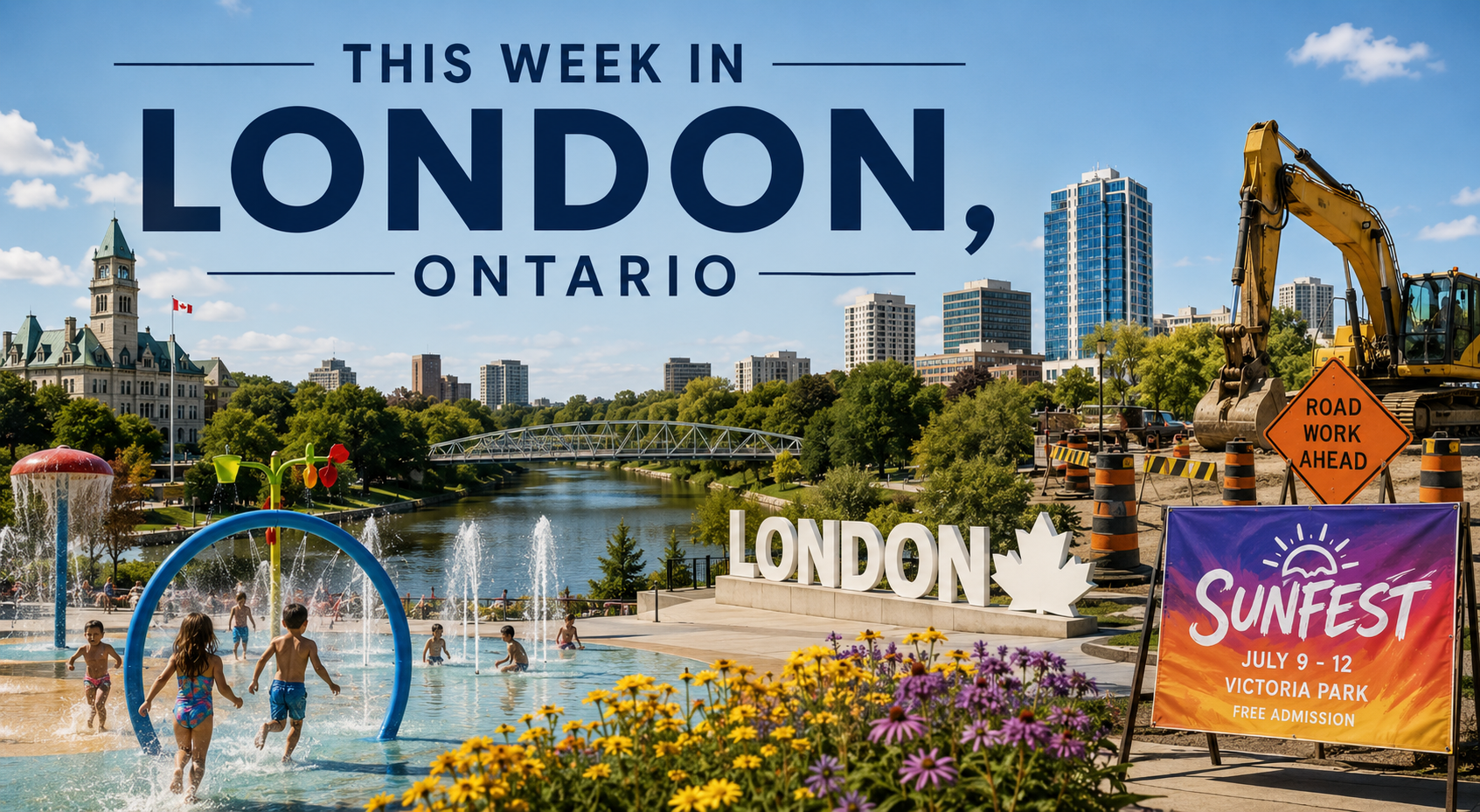
This Week in London, Ontario: Heat, Construction, Downtown Plans and a Busy July Ahead
London is moving into July with the usual summer mix: hot weather, road work, downtown planning, outdoor recreation and major festivals on the horizon. It is not the quietest week in the Forest City, but it is a useful snapshot of where things are headed.
This week’s local picture is pretty clear. The city is dealing with extreme heat, several major construction pinch points, a long-term push to reshape downtown, election season activity and a festival calendar that is about to get busy.
Extreme Heat Pushes Londoners Toward Pools, Spray Pads and Cooling Spaces
The Middlesex-London Health Unit issued an extreme heat warning beginning June 29, with temperatures expected in the 31 to 34°C range and highs potentially reaching up to 37°C through Friday and possibly into the weekend. That makes this more than just a “nice summer week.” For seniors, outdoor workers, young kids and anyone without good air conditioning, the heat can become a real safety issue quickly.
The timing makes London’s outdoor pool season especially relevant. The City says all outdoor pools opened for the 2026 season starting June 27, with drop-in recreational swims, lane swimming, aquafit and parent-and-tot swim sessions available through the summer. Wading pools are also open, and spray pads are running daily from 9 a.m. to 9 p.m., although the Ivey Park spray pad is delayed until late July because of construction.
The practical takeaway is simple: this is a week to plan around the heat. If you are heading downtown, taking kids to a park or working outside, build in shade and water. London has the public amenities, but people still need to use them before the heat becomes a problem.
Road Work Is Hitting Several Key London Corridors
Construction is one of the biggest day-to-day stories in London right now. Starting July 6, Western Road will be closed south of the Sarnia Road intersection to Althouse College for about two weeks while sewer, watermain and utility connections continue. The City expects reopening around July 20, with detours signed through Sarnia Road, Wonderland Road North and Oxford Street West.
That is not the only closure affecting movement through the city. The York Street and Colborne Street intersection closed July 1 and is expected to remain closed until fall 2026 as part of the York Street and Wellington Infrastructure Renewal project. The work includes replacement of aging watermains, sewers and underground infrastructure before the road is rebuilt.
Meanwhile, the Clark’s Bridge phase of the Wellington Gateway project is moving into overnight paving. Work is scheduled for July 6 and 7, with July 8 available if weather delays the job. The City says traffic will remain partially open during the paving work, but lane restrictions and access changes will vary depending on where crews are working.
For residents, this is the kind of week where the map matters. These projects are not cosmetic. They involve underground services, road rebuilding, transit features and long-term corridor improvements. That said, the short-term reality is delays, detours and the need to leave earlier than usual.
London’s Downtown Future Gets a New Roadmap
City Council has endorsed two major planning documents: the Economic Development Strategy for 2026 to 2030 and Downtown Reimagined, a downtown plan for the next decade. Together, they are meant to guide growth, investment, job creation and long-term downtown revitalization. According to the City, Council has endorsed the roadmap for economic growth and downtown revitalization as London looks toward its next stage of development.
The downtown plan includes 58 actions and four “Big Moves,” including a proposed River District to better connect downtown with the Thames River, improvements to public spaces, support for London’s UNESCO City of Music designation and a more flexible governance structure to carry the plan forward.
This matters because downtown London has been talked about for years in terms of safety, vacancies, business confidence, housing, events and public space. A plan alone does not fix those issues. The important part will be what survives the budget process, what gets built, and how quickly residents and businesses see visible change.
Still, the direction is notable. London is trying to connect economic development and downtown recovery instead of treating them as separate files. That is probably the right instinct. A stronger downtown helps with tourism, talent attraction, business confidence and civic identity, but only if the plan turns into actual street-level improvements.
Municipal Election Season Is Starting to Show Up
London’s 2026 municipal election is still months away, but the process is already underway. The City’s list of municipal election candidates is updated each business day by 4:30 p.m., with the certified list of candidates scheduled to be posted after certification by the City Clerk before 4 p.m. on August 24.
The municipal election takes place on October 26, 2026, and the City is already directing residents to check, update or add themselves to the voters’ list through Elections Ontario’s Register to Vote service. More details are available through the City’s London municipal elections page.
Municipal elections do not always get the attention they deserve, but they affect the things residents feel every week: roads, zoning, development, parks, libraries, policing budgets, downtown planning, waste collection and local taxes. With major plans now moving forward and big infrastructure projects underway, this election cycle could shape how London handles growth for the next four years.
Sunfest and July Festivals Put Victoria Park Back in the Spotlight
London’s July festival season is about to ramp up. Sunfest 2026 returns to Victoria Park from July 9 to 12 for its 32nd edition, with free admission, five outdoor stages, and a large mix of music, food and craft vendors. Tourism London describes it as one of Canada’s largest free celebrations of global culture.
Sunfest is not the only event on the calendar. Tourism London’s London festival listings show July packed with events, including Pride London Summer Festival from July 10 to 19, Rock the Park dates later in the month, Londonlicious Summer Fest starting July 24 and Ribfest beginning July 30.
This is the part of London summer that works. Victoria Park, Harris Park, Dundas Place, Covent Garden Market and the downtown core all become more active when the festival calendar is full. The challenge, as always, is making sure that activity turns into lasting downtown momentum rather than a few busy weekends surrounded by quieter weekdays.
The Bottom Line This Week
This week in London is a mix of inconvenience and momentum. The heat is serious enough to plan around. Construction is going to frustrate drivers, but much of it is tied to infrastructure the city actually needs. Council has backed a bigger vision for downtown and economic growth. Election season is beginning to matter. And July’s festival schedule is about to bring more people into the core.
For Londoners, the week comes down to three practical things: stay cool, check your route before driving, and keep an eye on the bigger city-building decisions happening behind the scenes. They may not all be flashy, but they are shaping what London feels like now and what it becomes next.