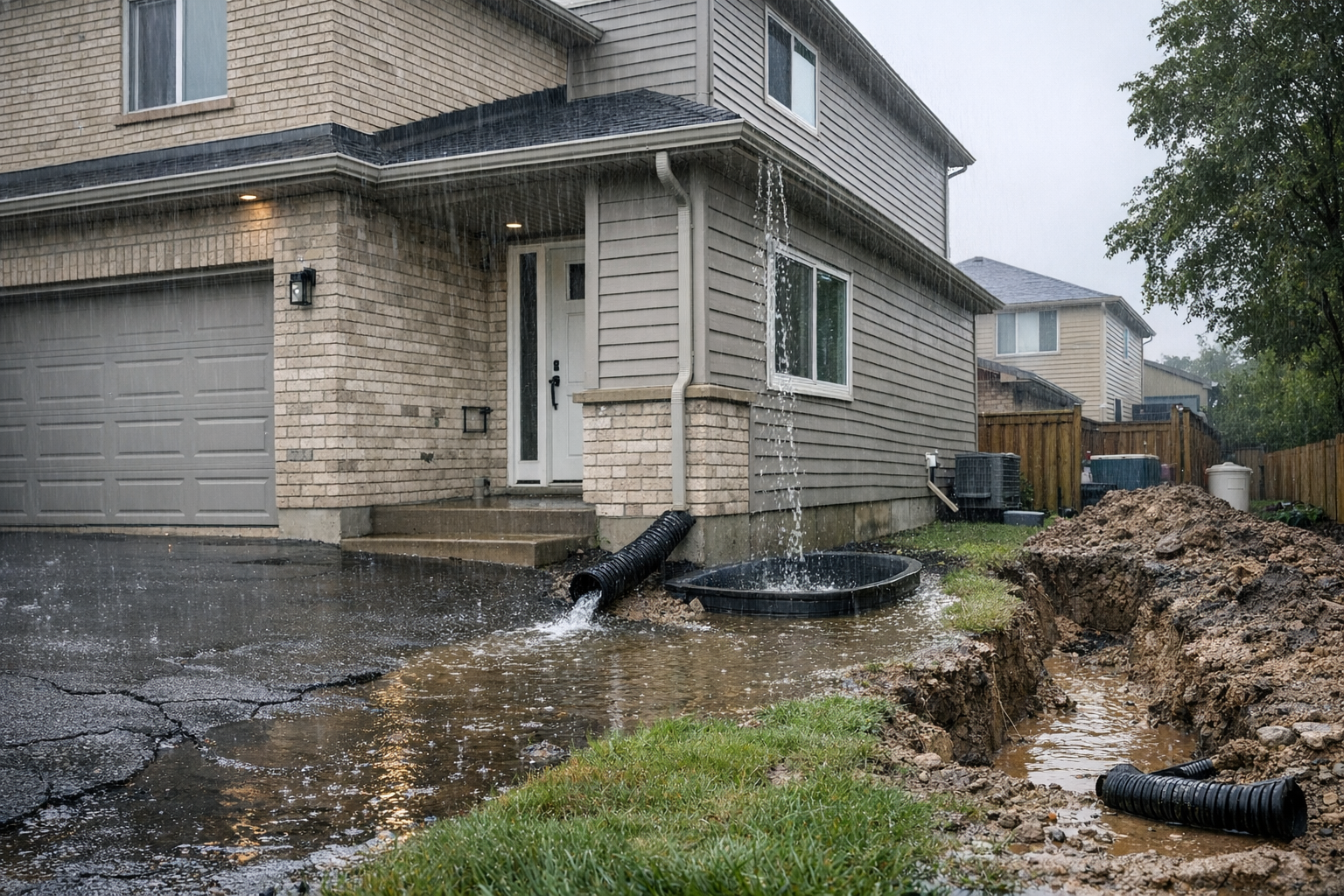
Common Causes of Basement Water Problems in London, Ontario
Why it matters
Basement water rarely starts with one obvious failure. In London, Ontario, wet basement problems often come from a mix of soil pressure, drainage issues, and small openings that slowly get worse. If the source is misread, repairs can miss the real problem and moisture keeps returning.
Hydrostatic pressure against walls and floors
After heavy rain or snow melt, water builds up in the soil around the foundation. That pressure pushes moisture through pores in concrete, floor joints, and small cracks in basement walls.
A common mistake is treating only the inside stain or damp spot. If hydrostatic pressure is the driver, paint-on sealers and patch jobs often fail because the water is still pressing from the outside.
The consequence is gradual damage. Flooring, drywall, and stored items can be affected long before you see standing water.
Clogged or collapsed drainage systems
Perimeter drainage systems are supposed to collect groundwater and move it away before it reaches the basement. When those pipes clog with silt or roots, or collapse with age, water can back up along the footing.
This problem is easy to miss because the failure is underground. Homeowners may see repeated dampness in the same area and assume the wall itself is defective, when the real issue is poor drainage below grade.
Repair decisions here involve cost and access. Cleaning may help if the pipe is only blocked, but a crushed section usually means excavation and replacement.
Poor lot grading and surface runoff
The ground around the house should slope away from the foundation. If it slopes inward, rainwater collects near the wall and increases the chance of seepage.
This often happens after landscaping changes, settling soil, or hard surfaces that redirect runoff. Even a small low spot beside the house can keep water pooling where it does the most harm.
- Soil that settles against the foundation after construction
- Patios or walkways pitched toward the house
- Downspouts discharging too close to the wall
Ignoring grading problems can make every storm look like a foundation failure. In many cases, surface control is the first thing that should be checked.
Window well leaks and failed basement window seals
Basement windows sit close to grade, so they are exposed to runoff, splashing, and debris buildup. If a window well fills with water or the seal around the frame breaks down, water can enter quickly.
A frequent failure mode is a blocked drain at the bottom of the well. Water rises, presses against the window, and finds gaps at corners, old caulking, or deteriorated frames.
These leaks can look like wall seepage at first. That confusion is one reason basement water infiltration is often misdiagnosed during the early stages.
Plumbing leaks that look like seepage
Not every wet basement comes from outside water. Leaks from supply lines, drain pipes, water heaters, or nearby fixtures can create damp walls, puddles, and musty smells that mimic foundation trouble.
The tradeoff here is diagnostic time. Opening walls or testing plumbing may feel like a detour, but skipping that step can lead to unnecessary waterproofing work while the real leak continues.
One clue is timing. If moisture appears regardless of rainfall, or near bathrooms, laundry areas, or mechanical equipment, plumbing should be ruled out early.
Seasonal soil movement and foundation cracks in London, Ontario
Seasonal moisture swings cause soil to expand and shrink. That movement puts stress on foundation walls and floors, which can lead to new cracks or reopen old ones.
Not every crack leaks right away. Some stay dry for months, then start admitting water during wet periods when the surrounding soil is saturated.
The main risk is assuming a crack is cosmetic because it looks small. In London, Ontario, freeze and thaw cycles and changing soil moisture can turn a minor opening into a repeat entry point for water.
What to check first before planning repairs
Start with the simplest observations. Look at where water appears, when it appears, and what conditions trigger it.
- After rain or snow melt, suspect grading, window wells, or drainage outside
- In one fixed area only, inspect cracks and nearby drainage paths
- During dry weather too, rule out plumbing before major foundation work
Basement water problems are easier to solve when the cause is identified before repairs begin. The right fix depends on where the water starts, not just where it shows up.